 Peakmarrow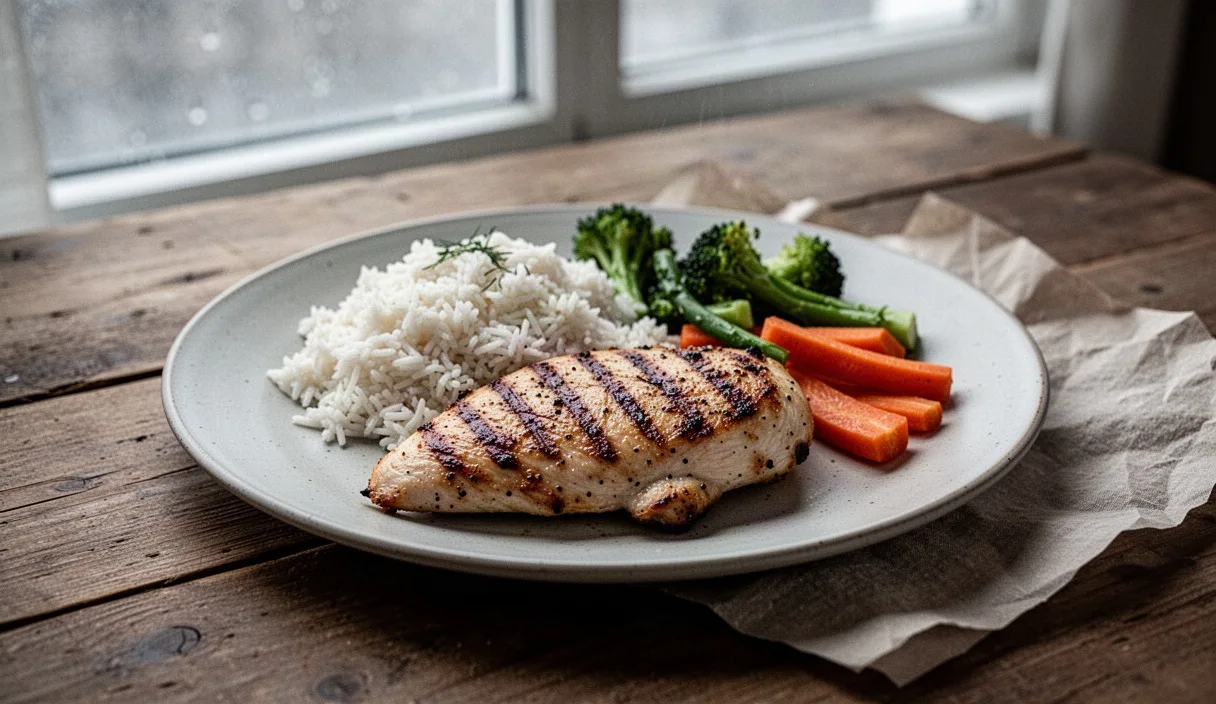

Most people who try to eat more protein quit within a week, not because the goal is wrong but because the method is exhausting. Weighing chicken breasts, logging every almond, and calculating macros for a bowl of lentil soup turns eating into homework. That kind of precision is useful for a bodybuilder twelve weeks out from a competition, but it is overkill for someone who just wants to feel fuller, keep muscle as they age, or stop snacking at 4 p.m.
The good news is that protein needs can be estimated with tools you already own: your hand, your plate, and a weekly rhythm instead of a daily tally. This checklist approach trades decimal-point accuracy for consistency, which is the trait that actually matters over months and years. Below is a system built around portions and patterns rather than grams, followed by a seven-day checklist and a list of signs that tell you when it is time to adjust.
Why protein needs are easier to estimate than measure
Grams-based protein targets sound scientific, but they rest on estimates too. A common guideline is roughly 0.6 to 0.9 grams of protein per pound of body weight for adults who are active or trying to preserve muscle, though a doctor or registered dietitian can give a number suited to your health history. That range itself spans a 50% difference, which shows that even the "precise" number is really a wide window, not a single correct figure.
Think of it like watering a garden. You do not measure exactly 473 milliliters of water for each tomato plant; you learn that a full watering can, roughly, keeps the soil moist. Protein works the same way. Once you know that a palm-sized portion of meat, fish, or tofu contains somewhere between 20 and 30 grams of protein, you no longer need a scale to stay in a reasonable range across the day.
Measuring grams also invites a false sense of control. Food labels round numbers, cooking changes weight, and restaurant portions vary by chef. A steak that "should" be 6 ounces might be 5.2 or 7.1 depending on who cut it. Estimation tools like the palm rule absorb that noise automatically, because they are built on visual proportion, not on trusting a printed label to be exact.
The palm-sized portion rule and how it works
The palm rule is simple: one palm-sized, palm-thick portion of a protein-dense food at a meal is a reasonable serving for most adults. For someone with an average adult hand, that is roughly 3 to 4 ounces of cooked meat, fish, or poultry, or the equivalent in eggs, tofu, tempeh, or Greek yogurt.
Here is why this works better than eyeballing "a piece of chicken." Hand size scales roughly with body size, so a smaller person's palm portion is naturally smaller, and a larger person's is naturally larger. It is a built-in adjustment mechanism that a fixed number like "4 ounces for everyone" does not offer.
A rough comparison of common palm-sized portions:
| Food | Palm-sized portion | Approximate protein |
|---|---|---|
| Chicken breast, cooked | 1 palm, ¾ inch thick | 22 to 26 grams |
| Salmon, cooked | 1 palm, ¾ inch thick | 20 to 24 grams |
| Firm tofu | 1 palm, 1 inch thick | 14 to 18 grams |
| Greek yogurt, plain | 1 cupped palm | 15 to 20 grams |
| Eggs | 2 to 3 eggs | 12 to 18 grams |
Most adults aiming for a solid intake do well with two to three palm-sized portions spread across the day, adjusted up if they are larger, very active, or older, since aging bodies tend to need somewhat more protein per meal to use it efficiently for muscle maintenance.
Spreading protein across the day instead of one meal
A pattern shows up again and again in casual diets: almost no protein at breakfast, a moderate amount at lunch, and a large steak or chicken breast at dinner. The daily total might look fine on paper, but the body cannot "bank" protein the way it banks fat for later use. Muscle-building and repair processes respond to protein available in the hours after each meal, not to a lump sum eaten once a day.
This is similar to paying a mortgage. Paying the entire year's total in December does not satisfy the lender the other eleven months; you need it distributed. Protein is closer to that monthly payment than to a savings account you can top up whenever convenient.
A practical target is to include a palm-sized portion, or its plant-based equivalent, at each main meal rather than concentrating it at dinner. For breakfast specifically, this often means moving beyond toast and coffee toward eggs, Greek yogurt, cottage cheese, or a protein-containing smoothie with milk or a fortified plant milk.
- Breakfast: 2 eggs plus a slice of whole-grain toast, or a bowl of Greek yogurt with berries and nuts.
- Lunch: a palm of chicken, tofu, or beans added to a salad or grain bowl.
- Dinner: a palm of fish, meat, or a legume-based dish like lentil curry.
- Snack, if needed: a handful of edamame, a cheese stick, or a small tin of tuna.
A seven-day checklist you can actually follow
A weekly checklist works better than a daily one because it forgives an off day without derailing the whole effort. If Tuesday's dinner was mostly pasta with a thin sprinkle of parmesan, Wednesday can quietly make up the difference, and the week still balances out.
Here is a simple version to print or copy into a notes app. Check a box each time a meal includes a palm-sized protein portion, plant or animal:
- Monday: protein at breakfast, protein at lunch, protein at dinner.
- Tuesday: protein at breakfast, protein at lunch, protein at dinner.
- Wednesday: protein at breakfast, protein at lunch, protein at dinner.
- Thursday: protein at breakfast, protein at lunch, protein at dinner.
- Friday: protein at breakfast, protein at lunch, protein at dinner.
- Saturday: protein at breakfast, protein at lunch, protein at dinner.
- Sunday: protein at breakfast, protein at lunch, protein at dinner.
Twenty-one boxes total. The goal is not a perfect twenty-one; it is noticing patterns. Someone who checks 14 out of 21 boxes, missing mostly at breakfast, has found their weak point without needing a single gram calculation. That is the real value of the checklist: it turns a vague goal like "eat more protein" into a visible, countable habit you can review on Sunday night in under a minute.
Easy protein sources for busy weekdays
Consistency depends heavily on convenience. A weekday breakfast plan that requires cooking eggs at 6:45 a.m. before a commute will fail more often than it succeeds, not from lack of willpower but from lack of time. The sources below are chosen because they need little to no preparation.
- Cottage cheese cups: single-serve containers with 12 to 14 grams of protein, no cooking required.
- Canned tuna or salmon: pairs with crackers or a salad, keeps in a desk drawer for months.
- Rotisserie chicken: a store-bought bird can supply protein for three to four meals across a week.
- Edamame, frozen: microwaves in three minutes, roughly 17 grams of protein per cup.
- Greek yogurt or skyr: higher in protein than regular yogurt, good for breakfast or a snack.
- Canned beans or lentils: rinse and add to soups, salads, or rice for a quick plant-based boost.
- Protein powder: useful as a backup, not a replacement for whole foods, especially on days when a meal is skipped entirely.
Batch cooking on a Sunday, such as grilling four or five chicken breasts or boiling a dozen eggs, removes the daily decision-making that causes protein-light meals to happen by default on tired weeknights.
Signs your current intake is falling short
Without weighing food, how does anyone know if they are actually eating enough? A few practical signals tend to show up before any lab test would, though persistent or severe symptoms should be discussed with a doctor or dietitian rather than self-diagnosed.
- Frequent hunger within two hours of eating: protein and fiber are the two nutrients most linked to feeling satisfied after a meal; a meal of mostly refined carbs often leaves people hunting for a snack quickly.
- Noticeable strength or recovery decline: if workouts that used to feel manageable now leave you unusually sore or weak for days, low protein intake relative to activity level can be a contributing factor.
- Hair thinning or slow nail growth: protein supplies the building blocks for keratin; chronic shortfalls can show up here over months, though many other causes exist and this alone is not a diagnosis.
- Checklist boxes consistently unchecked at breakfast: if a review of the weekly checklist shows the same meal missing protein week after week, that is a clear, low-tech signal to adjust before anything shows up physically.
Common mistakes
One frequent error is treating grains as protein. A bowl of white rice or a plate of pasta feels substantial, but it contributes only small amounts of protein compared to a similarly sized portion of meat, fish, or legumes. Volume and fullness are not reliable stand-ins for protein content.
Another mistake is loading all the protein into dinner and calling it a balanced day. As covered earlier, distribution matters, and a 0-gram breakfast followed by a 40-gram dinner is not equivalent to a moderate amount at each meal.
A third mistake is assuming plant eaters need to obsess over combining specific foods at every single meal to get "complete" protein. While variety across the week matters, modern nutrition guidance generally agrees that eating a range of plant proteins, beans, lentils, tofu, nuts, whole grains, over the course of a day or two covers amino acid needs for most healthy adults without meal-by-meal combining.
Next steps
Start this week with the checklist, not a food scale. Print or write out the seven-day grid, and simply mark a box each time a meal includes a palm-sized portion of protein-rich food. Do not worry about hitting all 21 boxes in the first week; the point is to see where the gaps naturally fall.
Stock two or three convenient sources from the list above, such as cottage cheese cups and frozen edamame, so a missed breakfast or a rushed lunch has a fast fallback instead of defaulting to protein-light options. Review the checklist on Sunday evening, notice the pattern, and adjust just one meal for the following week rather than overhauling everything at once.
If you have kidney disease, are pregnant, are managing metabolic balance, or have any other condition where protein intake needs closer attention, talk with a doctor or registered dietitian before making significant changes, since general guidelines like this one are not a substitute for individual medical advice.